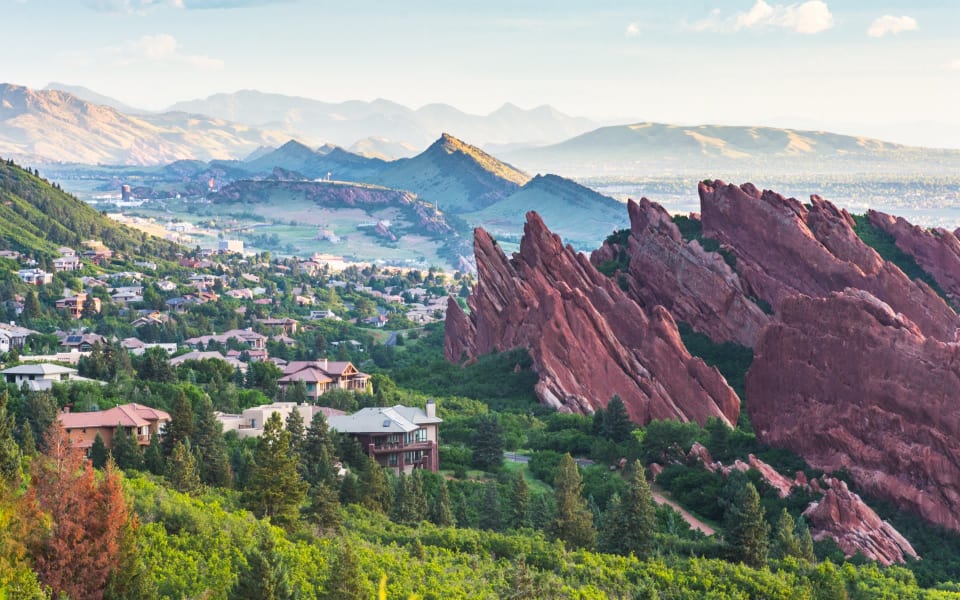
If you are thinking about moving to Colorado from out of sate – things can get real quickly. I still remember the exact moment Colorado stopped being a vacation idea and started being home. We’d been here a few weeks. I was standing in my kitchen in the south Denver suburbs, cooling off after a walk through Bear Creek, which was just steps out my front door. This is when it hit me that this wasn’t a trip. We weren’t going back. The moving truck was empty, the dog was asleep on a floor in a house that didn’t smell like ours yet, and I had no idea what I’d signed up for.
I moved to Colorado from out of state in 2024 — from Virginia, with my husband and our dog. I’d spent eleven years providing patient care in Oncology before this, so I thought I understood big life changes. But relocating across the country to a place I’d only visited is its own kind of leap. Now I help people make that exact leap for a living, and the question I get more than any other is some version of: what is it actually like?
So here’s the honest answer. Not the brochure version. The real one.
The altitude is real — and it humbles everyone
People warned me about the altitude, and I nodded along like I understood. I did not understand.
Denver sits at 5,280 feet — a literal mile above sea level — and most of the south suburbs aren’t far behind. Coming from near-sea-level Virginia, the thin, dry air got me before anything else did. The first week, I was winded walking up my own stairs and weirdly tired by mid-afternoon. That’s normal. Your body needs time to adjust to less oxygen, and the standard advice holds up: drink a lot more water than you think you need, go easy on alcohol at first, and don’t try to conquer a 14er your first weekend.
The dryness is the part nobody fully prepares you for. Coming from a humid climate, the lack of moisture in the air touches everything — your skin, your lips, even your sinuses. A humidifier and good lotion stopped being optional. The upside? Far fewer bugs, and that famous Colorado sunshine, with the state averaging somewhere around 300 sunny days a year, depending on who’s counting.
Your money behaves differently here
If you’re moving to Colorado from out of state for financial reasons, the picture is genuinely mixed, and it’s worth understanding before you fall in love with a listing.
Some of it works in your favor. Colorado has a flat state income tax of 4.4% in 2026 — the same rate whether you make $50,000 or $500,000. And the effective property tax rate is among the lowest in the country, which surprises a lot of people coming from the Northeast or the Midwest.
But housing is the line item that shocks newcomers. Years of population growth — a lot of it from California and East Coast transplants like me — have pushed home prices up across Denver and the south suburbs. Depending on where you’re coming from, your dollar may stretch much further or much less. And there are quirks: Colorado’s annual vehicle ownership tax is based on a percentage of your car’s value, so registering a newer car costs more than transplants expect. Speaking of which — once you establish residency, you’ve got 30 days to transfer your driver’s license and 90 days to register your vehicle. Put it on the calendar now so it’s not a scramble later.
The lifestyle is the whole reason
Here’s where the honest version turns into a love letter.
I’m an outdoors person, and Colorado rewards that more than anywhere I’ve lived. My week here looks completely different than it did in Virginia. I bike and run on trail systems that connect for miles. I’m fifteen, twenty minutes from real hiking in the foothills. There are dog parks everywhere — which, with now two dogs, matters more than I can tell you. In the summer, there are outdoor concert series and farmers markets practically every weekend, and the whole region tilts toward being outside.
The thing I tell everyone relocating here is this: nearly every suburb around Denver lends itself to an outdoor lifestyle. Some just do it differently than others. That’s actually the fun part of choosing where to land — matching the specific flavor of outdoor living to the life you want, not just picking a dot on a map.
What I wish someone had told me
A few honest things, transplant to transplant.
The first month is disorienting, and that’s okay. You will not feel settled immediately, and that’s not a sign you made the wrong call — it’s just what moving across the country feels like. Give yourself a season before you judge it.
Layers are a lifestyle, not a suggestion. A sunny 60-degree morning can turn into snow by afternoon and vice versa, especially in spring. The weather here moves fast.
And you do not have to figure out the neighborhoods alone. The biggest mistake I see relocators make is trying to choose a suburb from a thousand miles away using only listing photos and a Google search. The suburbs around south Denver are genuinely different from one another — in feel, in commute, in what your day-to-day looks like — and you can’t tell that from a screen.
If Colorado is calling you
Moving to Colorado from out of state was the best decision my husband and I have made, and I get to relive the good part of it every time I help someone else do it. The leap is worth it. It’s just a lot easier when someone who’s already made it is standing on the other side, telling you the honest version.
If you’re even thinking about a move to the south Denver suburbs, I’d love to help you skip the mistakes I made. Grab my free Denver Relocation Guide, Living in the South Denver Suburbs Guide, or both. You can also reach out directly — I answer my own messages, and there’s no pressure, just clarity.
Leave a Reply